
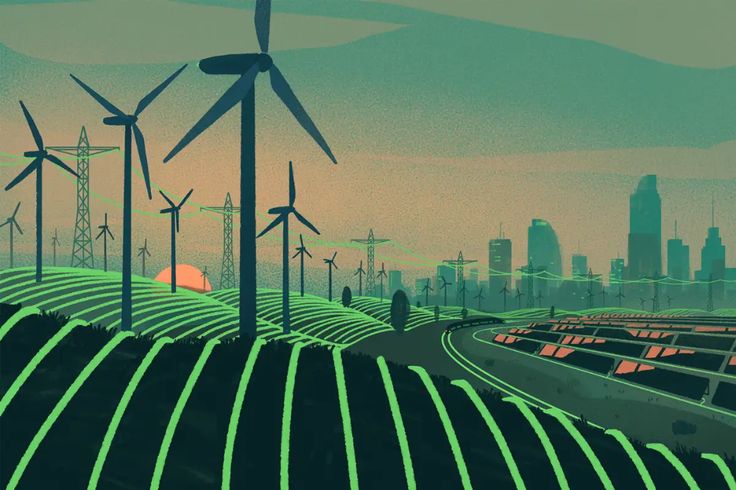
Renewable energy now accounts for over 29% of global electricity generation 
Natural gas is playing a role as a “bridge fuel” in many transition strategies 
Electrification is expanding across transportation, heating, and industrial processes 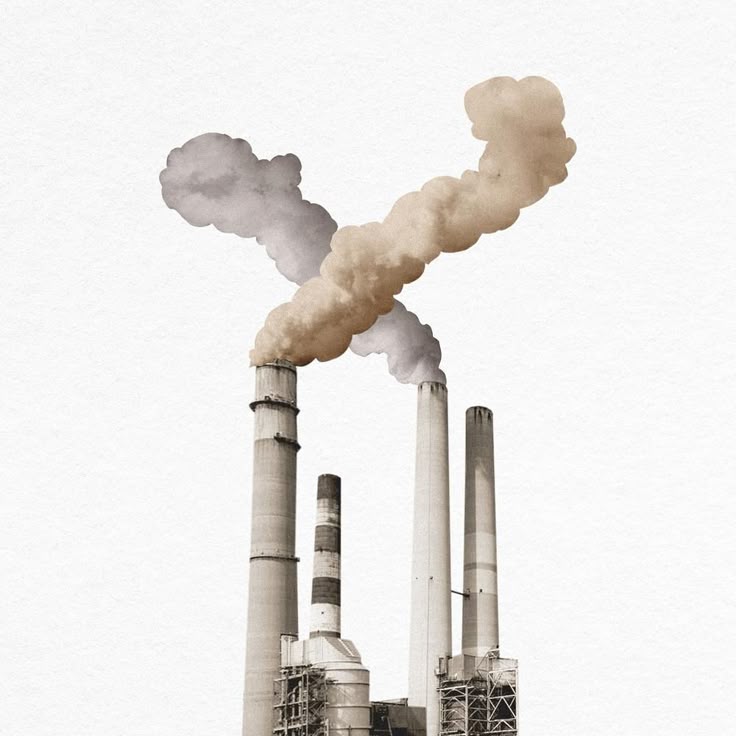
Coal consumption continues to decline in Western economies but remains significant in developing nations
The global energy landscape is diverse and complex, with multiple sources playing crucial roles in our ongoing transition. This page explores the current and emerging energy sources.
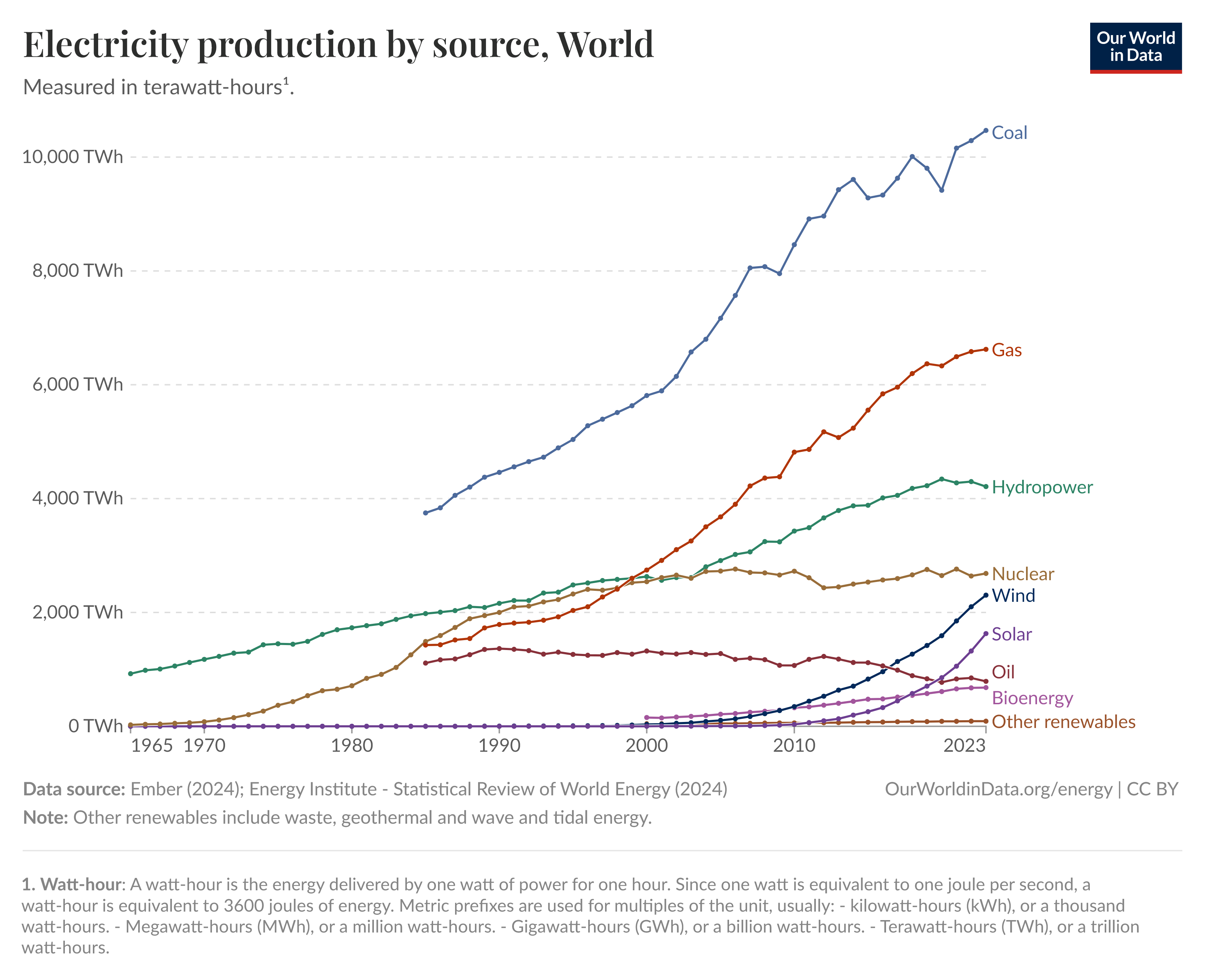
Renewable Energy Sources
Solar Energy
- Technologies: Photovoltaic (PV), concentrated solar power (CSP) & Building-integrated photovoltaics (BIPV)
- Key Characteristics
- Abundant and increasingly cost-competitive
- Scalable from residential to utility-scale
- Low operational emissions
Wind Energy
- Technologies: Onshore and offshore wind
- Key Characteristics
- Rapidly declining cost curve
- High potential in specific geographic regions
- Technological improvements increasing efficiency
Hydroelectric Power
- Technologies: Conventional dams, run-of-river, pumped storage
- Key Characteristics
- Mature renewable technology
- Provides grid stability and energy storage
- Environmental and social impact considerations
Geothermal Energy
- Technologies: Dry steam, flash steam, binary cycle
- Key Characteristics
- Consistent baseload power
- Location-specific availability
- Low carbon emissions High initial investment costs
- Minimal land footprint
Biomass and Bioenergy
- Technologies: Agricultural waste conversion, Energy crop cultivation, Anaerobic digestion, Pyrolysis systems
- Key Characteristics
- Circular economy potential
- Variable carbon neutrality
- Complex land use implications
- Supports agricultural economies
- Diverse feedstock options
Emerging and Transitional Energy Sources
Hydrogen Energy
- Technologies: Green (renewable hydrolysis), Blue (fossil fuel w/ carbon capture), Grey (steam methane reforming), Pink (nuclear electrolysis), Turquoise (methane pyrolysis)
- Key Characteristics
- High energy storage potential
- Versatile industrial applications
- Currently high production costs
- Complex infrastructure requirements
- Potential for cross-sector decarbonization
Advanced Nuclear Energy
- Technologies: Small Modular Reactors (SMRs), Molten salt reactors, Fusion reactors, Traveling wave reactors
- Key Characteristics
- Zero direct carbon emissions
- Potential for consistent baseload power
- High initial capital costs
- Complex regulatory environments
- Ongoing safety and waste management challenges
Fossil Fuel Transitions
Natural Gas
- Technologies: Combined cycle gas turbines, LNG infrastructure, Methane capture systems, Hydrogen blending tech, Carbone capture & storage integrations (CCS)
- Key Characteristics
- Lower carbon intensity compared to coal
- Flexible power generation
- Existing extensive infrastructure
- Methane leakage concerns
- Transitional role in energy systems
Coal and Oil
- Technologies: Ultra-supercritical coal plants, Enhanced oil recovery, CCS, Coal-to-hydrogen conversion, Biomass co-firing
- Key Characteristics
- Declining global investment
- Significant economic dependencies
- High carbon emission profiles
- Complex workforce transition challenges
- Reducing competitiveness against renewables
 lookingforenergy.blog